You said it clearly. You said it kindly. So why are you having the same conversation again?
You did the walkthrough. You had the conversation. You were clear about what needed to change, you were respectful, and you even followed up with an email.
Two weeks later, you walk back into that classroom, and it looks exactly the same.
It's tempting to decide the teacher isn't committed or isn't coachable. Before you land there, I want you to replay the conversation and pay attention to one thing: how did it end?
The Last Thing You Say Is What They Remember
Most of us were trained on the feedback sandwich. Start with something positive, slip in the critique, end on something positive. It feels respectful, and in a building where you need relationships to get anything done, that matters.
The problem is that people don't walk out of a conversation holding all three layers equally. They hold the last thing you said.
Here's what that sounds like in real life. A veteran teacher has the curriculum in front of students, but he isn't teaching it. Students are working through the lesson on their own, and when they get stuck, there are no notes to go back to. His principal says:
"Your room is always calm and organized, and the kids clearly respect you. I did notice the lesson felt a little independent, so maybe think about adding some more direct instruction. But overall, you're such an asset to our science team!"
Every sentence is true. And what he hears is: I'm an asset. Nothing needs to change.
The principal wasn't wrong about anything. The message that mattered was just buried in the middle, softened with "maybe think about," and followed by a compliment.
Kind Isn't the Same as Clear
Most of us lean on the sandwich for a good reason. We care about the person in front of us, and we know we'll need that relationship next week when we ask them to cover a class or try something new. I understand that. But when the message is cushioned so much that it doesn't land, the teacher doesn't get the support they needed, and neither do the students in that room.
Being clear is the kind thing to do. Being vague is what lets a problem grow until it becomes a much harder conversation in January.
Try This Before Your Next Conversation
Before your next feedback conversation, write down the very last sentence you plan to say. Then ask yourself:
- If this is the only thing they remember, will anything change?
- Does it name what I expect to see?
- Does it include when I'll be back to see it?
If your last sentence is "you're doing great" or "keep working on it," you already know how the next two weeks will go.
There's a Better Structure
In my coaching with principals, assistant principals, and district leaders, I teach a different approach. I call it AAA: Affirm, Address, Ask for commitment. It keeps what's good about the sandwich, which is acknowledging what's working, and drops what doesn't. The conversation ends with a clear yes to what you will see and by when. You can't hold someone accountable for something they never committed to.
Knowing the three moves is the easy part. Saying them in the moment, to a defensive teacher or an AP who thinks they're doing fine, is where most leaders get stuck.
The Bottom Line
Your feedback is only as strong as the last sentence. If it ends on a compliment, that's what they'll remember. If it ends on a commitment, you have something to follow up on.
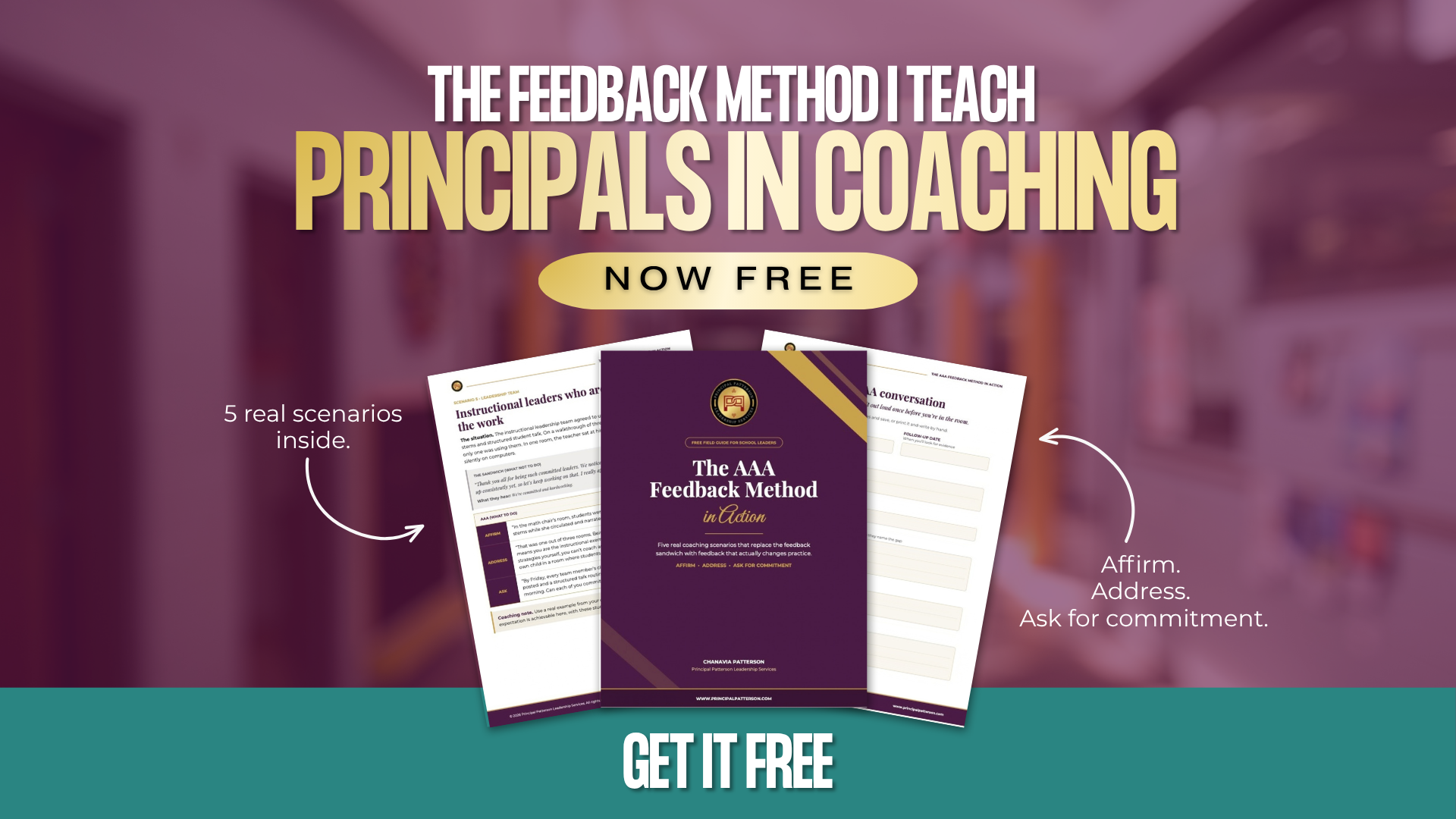
Get the Free Field Guide
I put together a free field guide, The AAA Feedback Method in Action, built from real coaching conversations with leaders I support. Inside you'll find:
- Five real scenarios, each shown both ways: the sandwich, and the AAA version that actually changes practice
- The exact language to use with a veteran teacher, a defensive teacher, an AP whose feedback gets ignored, a full PD room, and a leadership team
- A fillable planner to script your next conversation before you walk into the room
- A quick reference with phrases that turn "optional" into an expectation



Responses